tiger's nest

the tiger's nest (paro taktsang) is an iconic monastery in bhutan. guru rinpoche introduced buddhism to bhutan in the 8th century. according to legend, a tigress carried guru rinpoche on her back up to the peak of a mountain, where he meditated in a cave for three months. monks subsequently founded the monastery around the site of the cave in 1692. it underwent expansion and renovation over the years, and now contains a variety of beautifully-decorated sanctuaries that are, of course, off limits to photography. (as a photographer, it is sometimes difficult to remember that things are worth looking at even if i can't shoot them, but i made the effort here.)

the monastery is in a ridiculously remote site 900 meters above the valley floor.  it took us about four hours (with many stops for photographs and gasps of air) to reach the entrance. however, this gave us multiple opportunities to photograph amazing scenery that included strings of prayer flags. prayer flags are pretty common around bhutan; they are banners inscribed with copies of buddhist mantras that people hang to spread blessings on the wind to the surrounding area. sometimes they are hung gracefully, and sometimes strings of them are hung together so heavily that they look like laundry on the line. some are hung for good fortune; others are hung as prayers for the deceased; and others make nice frames for portraits.

i have more prayer flag photos, but for some reason blogger.com keeps hanging my computer up when i try to upload them ... 


next (hopefully): dancing animal spirits

monks, monks, monks (part 2)


one day, we came upon a housing-blessing ceremony, called a lakh, which is the indian word for 100,000, because the monks recite their blessing 100,000 times. they were fine with our being in there, so eleven of us spent approximately 40 minutes in these cramped rooms, shooting away happily. apparently, we're not supposed to reproduce the text on the scrolls, so if you're looking at these photos, you should probably watch out for falling pianos or dengue-bearing mosquitos.


monks, monks, monks (part 1)

bhutan is a buddhist country, and the culture is inextricably linked with the religion. there are monks everywhere; many boys are educated in monasteries; even the district government offices are located in monasteries.  going in, it is tempting to imagine that the monks are saintly ...

... aloof ...

... and mysterious ...

... but the truth is that a lot of them are just kids.


next: monks, monks, monks (part 2).

bhutan - scenery

i've just returned from a 10-day trip in bhutan with a group of photographers. the basic stats on bhutan: a population of just under 700,000 people in an area of 18,146 square miles, sandwiched between india and china at elevations of up to 23,000 feet above sea level. the geography and its architecture may remind one of switzerland or austria:


(note the chilies drying on the roof: the national dish is ema datsi, sliced chilies in a cheese sauce. you will find chilies drying on almost every roof.)

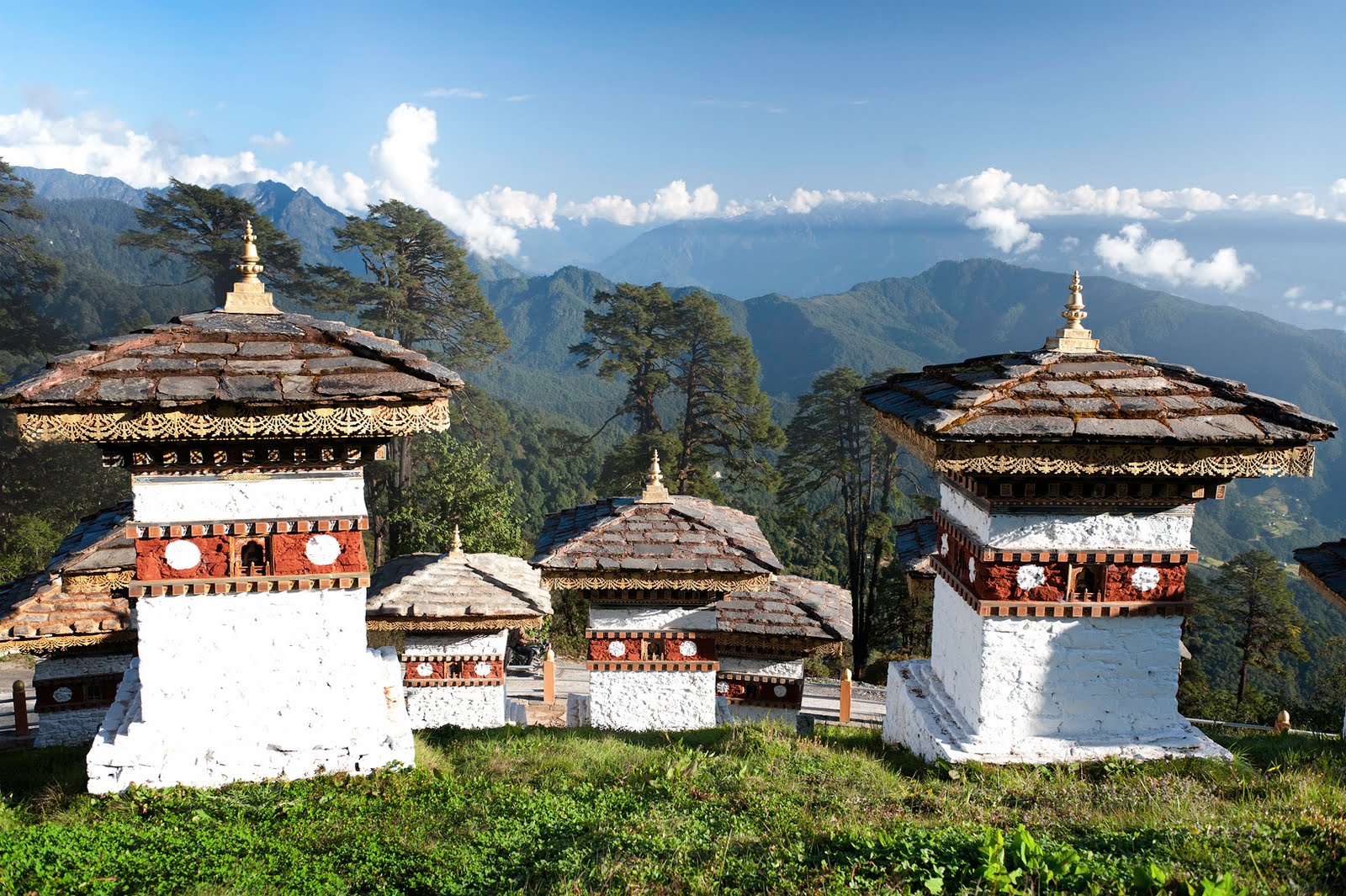
the views of the himalayas are pretty impressive.  these photos were taken from a hill covered with 109 stupas, or chortens, built to commemorate a victory over rebels in 2004.


the foothills, with the fog winding its way through the trees in the early morning and the sun shooting over the tops in the late afternoon, make for good photography, too, especially in b&w:


finally, the view was particularly thrilling when we were driving along the narrow winding road along the side of the mountain. we were up somewhere around 9,000-10,000 feet and there were many sections of the road - full of hairpin curves, and too narrow in parts for two cars to pass one another - where the edge had been swept away by landslides caused by the previous month's earthquake. along these sections, the movement of earth had left only a foot or so of crumbly surface between us and a straight drop downward; meanwhile, the occasional boulder at the side of the road suggested that the situation on the hillsides above us might not have been all that stable either.  nature has a way of reminding you of your own smallness at the most inopportune times.


next: monks, monks, monks.

another wall


i must have mentioned somewhere that on august 21, i had my first gallery show.  i displayed 11 photographs - five abstract close-up shots of the paint and posters on building exteriors that, over the years, have worn away into interesting patterns; and six more literal close-ups of hindu shrines, alleys, trees and the like.  the above shot is another in the vein of the abstracts.  i'm really enjoying looking for "found art" on the walls of chennai, even though none of these were purchased at the gallery show.  artists are never understood in their time - except for the ones that are, of course.

we recently moved to a new apartment that is closer to the other consulate residences and to better restaurants.  we're still surrounded by boxes since we're making a concerted effort to sort and purge our stuff, but we're much happier here.  if nothing else, we're no longer stuck in the old traffic patterns, which means that every trip takes about 20 minutes less than it did when we were in our house.  the dog has a good-sized yard in which to chase it, the mysterious thing in our garden that he fruitlessly hunted for the first year; it seems to have come with us.

i go to bhutan on next week via kolkata (calcutta).  photos to come.

ganesh chathruthi

woman painting ganesh statues; man decorating his ganesh statues while the clay is still soft; rows of statues, some painted; a woman making flower wreaths for pooja ceremonies.

i took the leica on a photowalk with the photographic society of madras, to capture the start of ganesh chathruthi.  this is a holiday for the god ganesh, on the day which (it is said) his power on earth is at its strongest.  the people who worship ganesh buy statues of the god and hold ceremonies in their homes; then they take the statues to the ocean and carry them in.

i should say something about the previous post of the firewalk.  this was a lot easier to capture than the first one i shot, in part because the fire was so much smaller that the heat was easier to take.  granted, it's still terrible light, so the shutter speed is not what i would have liked, but it was a good night.  unlike the other firewalk, most of the devotees here pierced their cheeks with vel just as the worshippers do during adi kirthigai.

some of the priests and worshippers were not keen on having me take photos, but the majority of the crowd ignored me and a few indians kept grabbing me to help me find a good vantage point. usually, there is a handful of indians who want to share the ceremony with the foreigner holding a camera, so i had a variety of guides during the night ranging from an eight-year-old boy to a fairly drunk 50-something.

i'll have more photos to add once i receive a new supply of film chemicals.


the end of adi kirthigai


see more by clicking here